Maine court requires relief for unrepresented defendants
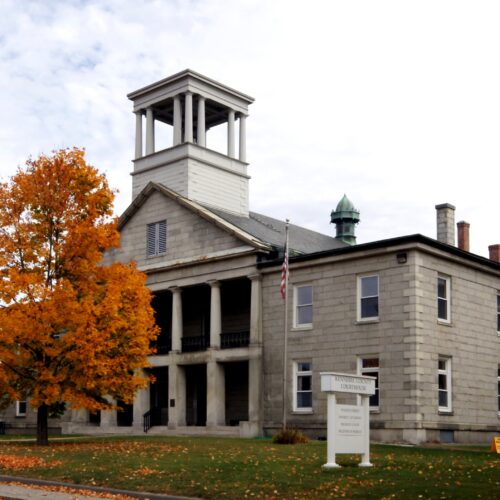
Pleading the Sixth: The Kennebec County Superior Court ruled that the state of Maine is failing to provide attorneys to indigent defendants as required by the Sixth Amendment. The court ordered a couple of methods of relief for unrepresented defendants including release of in-custody defendants if they are detained for more than 14 days without counsel, and case dismissal for in-custody and out-of-custody defendants if they have been without counsel for more than 60 days.
This month, the Kennebec County Superior Court ruled that the state of Maine is failing to provide attorneys to pre-trial indigent defendants and ordered release of detained defendants and dismissal of cases after certain periods elapse. The case, Robbins v. Maine, was originally filed as a class action lawsuit claiming that Maine was failing to provide a sufficient indigent defense system. Maine funds, administers and oversees public defense through the Maine Commission of Public Defense Services (MCPDS). Since 6AC’s 2019 evaluation, the state has worked to reform its public defense system; however, the effort fell short and Maine’s judiciary stepped in to protect the constitutional right to counsel.
The background of the lawsuit
On March 1, 2022, the ACLU filed a class action lawsuit in Kennebec County Superior Court on behalf of five in-custody indigent criminal defendants claiming Maine’s indigent defense commission fails “to adequately supervise, administer, and fund an indigent defense system” in violation of state and federal law.” From 2022 through 2024, the parties engaged in settlement negotiations to resolve the lawsuit; however, at the same time, a crisis arose in which pretrial indigent defendants were not being appointed any counsel at all. In February 2024, upon finding that the unrepresented defendant crisis continued to worsen, the court denied the latest proposed settlement agreement and ordered the litigation to proceed in two phases: (1) to focus on the unrepresented defendant crisis; and (2) to focus on the systemic constitutional violations raised in the original complaint.
To start 2025, the Kennebec County Superior Court ruled that unrepresented defendants were being denied their right to counsel under the Sixth Amendment. In late January, a bench trial was held regarding the unrepresented defendant crisis and proposed remedies, and on March 7, 2025, the Kennebec County Superior Court issued an order for immediate relief. The court held that unrepresented defendants are entitled to immediate relief as the evidence showed (1) irreparable harm to unrepresented defendants (i.e., the lack of an attorney during pretrial stages can harm the preparation of a defendant’s case, not to mention the defendant’s personal life), (2) that this harm outweighed any potential harm to the state agency, and (3) that the public interest in relief is significant.
The remedy for unrepresented defendants in Maine
The court’s remedy first focused on requiring MCPDS to provide representation for in-custody indigent defendants. While noting that MCPDS is “constrained by the resources that the Executive and Legislative Branches have provided,” the court found that MCPDS already has some capacity and authority to address this crisis. The court left it up to MCPDS to decide what steps to take and to report to the court on progress by April 3, 2025. Also, by April 3, the court ordered MCPDS to create and file with the court a written plan on how to remedy the unrepresented defendant crisis for both in-custody and out-of-custody defendants.
The court’s second remedy provides specific relief for unrepresented indigent defendants throughout April and May. Specifically, the court will conduct hearings during April for in-custody defendants and May for out-of-custody defendants to determine if each unrepresented defendant should be awarded detention relief and/or case relief. MCPDS must provide counsel for each defendant to represent them at their hearing. If at the hearing for an in-custody defendant, the court determines the defendant has been detained without counsel for more than 14 days after their initial appearance or arraignment, the court must order the release of the defendant from detention, subject to conditions of release. Even still, an unrepresented defendant is not released from custody if counsel is appointed within seven days of the hearing and/or if the charged offense is not subject to bail (e.g., murder charge).
If at the hearing for an in-custody or out-of-custody defendant, the court determines the defendant has been without counsel for more than 60 days after their initial appearance or arraignment, the court must order the charges against the defendant be dismissed without prejudice, meaning the prosecution can again file the case once counsel is available. The only exception to this relief is if counsel is provided within seven days of the hearing.
What’s next for Maine?
The effectiveness of this relief and the next steps in Maine indigent defense reform remain to be seen. In 2004, Massachusetts faced similar systemic litigation in a case called Lavallee v. Justices in Hampden Superior Court; the state supreme court established a protocol of release from detention after seven days incarceration without counsel, and case relief after 45 days without counsel. In response to the ruling, Massachusetts passed comprehensive reforms, including increasing private appointed attorney compensation and expanding the government-staffed public defender system, resulting in a significant budget increase for the state agency and mitigation to the unrepresented defendant crisis. Perhaps the Robbins order will have a similar impact in Maine.