Expert Services
We provide technical assistance that is tailored to the unique needs and requests in each jurisdiction. This ranges from staffing government task forces, to holding confidential one-on-one meetings, to testifying before legislatures when asked. We also educate the public through speaking engagements, our Pleading the Sixth blog, and sharing what we know about the right to counsel so you can help fix the issue.
Government Technical Assistance
Speaking Engagements
-
December 1, 2017
Maine Work Group on Indigent Legal Services Augusta, Maine
Maine’s task force continues to study how to achieve greater cost-certainty in providing state-funded indigent defense services. 6AC Executive Director David Carroll and Staff Counsel Mike Tartaglia provide technical assistance to the task force, explaining how other states balance the need to ensure effective representation and the desire for cost efficiency.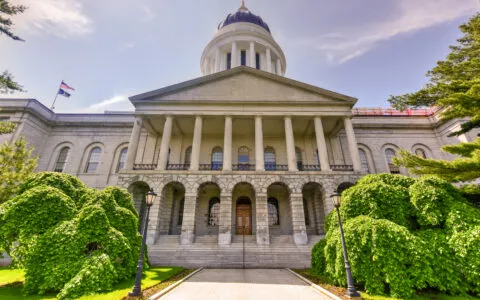
-
November 17, 2017
Maine Work Group on Indigent Legal Services Augusta, Maine
Maine’s legislature created a task force to examine how its indigent defense services can be provided with greater cost certainty. 6AC Executive Director David Carroll and Staff Counsel Mike Tartaglia explain the importance of oversight and accountability in a state-funded system where private attorneys bill hourly for providing representation to indigent people.
-
November 10, 2017
Indiana Task Force on Public Defense Indianapolis, Indiana
6AC Executive Director David Carroll addresses the task force members about the findings and recommendations in 6AC’s report, The Right to Counsel in Indiana: Evaluation of Trial Level Indigent Defense Services. He explains how the model Indiana currently uses to provide public defense representation legitimizes and institutionalizes the choices made by some counties to not meet the constitutional requirements for providing effective representation. Carroll also guides the task force members in examining models used in other states to deliver Sixth Amendment services.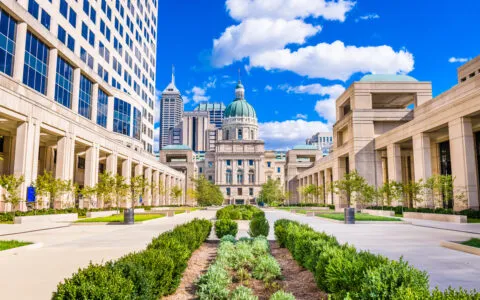
-
April 10, 2017
Tennessee Supreme Court, Indigent Representation Task Force Nashville, Tennessee
The Tennessee Supreme Court Indigent Representation Task Force releases its report, fulfilling its charge to determine how the state can deliver the right to counsel in a more efficient manner. 6AC Executive Director David Carroll participates in the press conference, following on 6AC’s provision of technical assistance to the Task Force supported by funding from the U.S. Department of Justice, Bureau of Justice Assistance.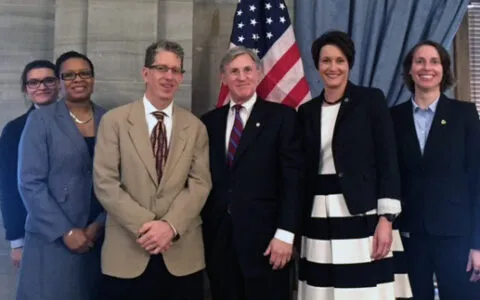
-
April 5, 2017
Nevada Senate Judiciary Committee Carson City, Nevada
The Nevada Senate Judiciary Committee is considering a bill to create a statewide Right to Counsel Commission. On written request of Senator Segerblom, chair of the Committee, 6AC Executive Director David Carroll provides technical assistance to the committee, explaining Nevada’s unique right to counsel history and the current deficiencies in providing indigent defense services in rural counties.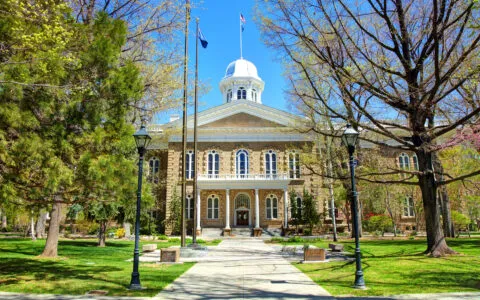
-
March 22, 2017
Idaho Public Defender Commission & General Assembly Boise, Idaho
Executive Director David Carroll discusses the progress made by the Public Defender Commission in implementing recent legislative changes to ensure the right to counsel, including comparisons to similarly situated states and next steps.
-
May 25, 2017
Wisconsin Press Conference at the State Capitol Assembly Parlor Madison, Wisconsin
Wisconsin pays attorneys only $40 per hour to defend the indigent accused. This is the lowest compensation rate in the country and has not changed in 20 years, since 1995 when the Wisconsin legislature reduced the rate from $50 per hour. David Carroll presents evidence from the 6AC report, Justice Shortchanged, showing that the constitutional imperative for independent, conflict-free public defense services has given way to fiscal considerations, at a press conference announcing the Wisconsin State Bar Association and Wisconsin Association of Criminal Defense Lawyers’ petition to the state Supreme Court to raise the hourly compensation rates and ban flat-fee contracts.
April 27, 2017
Washington Defender Association Conference Winthrop, Washington
Independence is the first of the ABA’s Ten Principles of a Public Defense Delivery System, yet in the state of Washington this principle is not officially contained in the state’s Standards for Public Defense Services. 6AC Executive Director David Carroll, along with Bob Boruchowitz of the Defender Initiative at Seattle University School of Law, explains how best to create and preserve the independence needed to insulate public defense systems and attorneys from inappropriate interference by governmental bodies and other justice system participants. Topics focus on ethical, structural, and managerial considerations to ensure that the administration of justice is not compromised by disadvantaged public defense systems.
March 28, 2017
Boston University School of Law Boston, Massachusetts
David Carroll discusses the ways in which systemic indigent defense deficiencies contribute to wrongful convictions. Special emphasis is placed on undue political and judicial interference and the use of United States v. Cronic to get at how systemic deficiencies prevent even the best lawyers from providing constitutionally effective right to counsel services.
March 10, 2017
Federal CJA Panel Attorney District Representative Conference Houston, Texas
6AC Executive Director David Carroll discusses independence of the federal public defense services and the work of the Committee to Review the Criminal Justice Act Program.
December 16, 2016
Indiana Press Conference at the Capitol Rotunda Indianapolis, Indiana
Beginning in the 1990s, the “Indiana Model” for providing public defense services was widely promoted as potentially the best way to improve the provision of the right to counsel in states throughout America. 6AC Executive Director David Carroll discusses how and why the system legitimizes and institutionalizes the choice of counties to not meet the constitutional parameters of effective representation, as detailed in the Sixth Amendment Center report released in October 2016.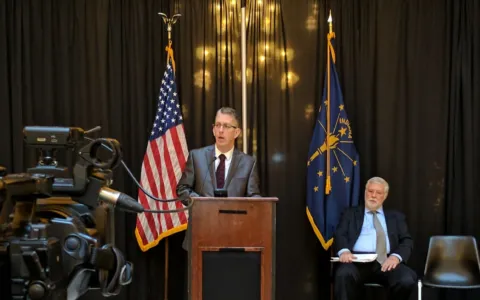
October 25, 2016
U.S. Department of Justice, Bureau of Justice Assistance, Right to Counsel National Campaign Washington, DC
Executive Director David Carroll co-moderates, along with Colette Tvedt of NACDL, a roundtable discussion on “Securing a Meaningful Right to Counsel: Perspectives on State Reforms.”David Carroll moderates at R2C 2nd annual meeting The panel discusses how best to identify and overcome deficiencies in indigent defense systems, using legislation, litigation, and public education approaches, as considered from the vantage of different types of stakeholders including judges, state legislators, and public defense providers. Topics include: a) Utah’s consensus approach to reform and the advancement of evaluation standards; b) Idaho’s recent legislative reforms and why conservatives are in the forefront of advancing the right to counsel; c) federal litigation in Washington State and the role of the U.S. Department of Justice; d) excessive caseloads of public defenders in Missouri and launching a media strike; and, e) the future of the right to counsel in New York. Panelists are: Derek P. Pullan, Utah Fourth District Judge; Christine Perry, Idaho State Representative; Michael Barrett, Missouri State Public Defender; Eileen Farley, Public Defender Supervisor for the cities of Mount Vernon and Burlington (Washington); Corey Stoughton, Senior Counsel at the USDOJ Civil Rights Division; and William Leahy, Director, New York State Office of Indigent Legal Services.
Support 6AC
Criminal justice issues that disproportionately harm poor people, such as wrongful convictions and over-incarceration, cannot be fixed if indigent defendants are given attorneys who do not have the time, resources, or qualifications, to be a constitutional check on government. Yet, investment in improving indigent defense services remains largely neglected. The Sixth Amendment Center is the only nonprofit organization in the country that exclusively examines, uncovers, and helps fix the root of the indigent defense crisis in which inequality is perpetuated because poor defendants do not get a fair fight.
The Sixth Amendment Center is a tax-exempt 501(c)(3) nonprofit organization under EIN: 45-3477185.
Donations are tax-deductible to the fullest extent allowable under the law.